Blog
Kimi K3 & Open Weights: Frontier Agents Without Locked-In APIs
Moonshot Kimi K3, day-0 vLLM, MCP goes stateless, and how businesses should adopt open models
On this page
Moonshot’s Kimi K3 pushed open-weight models into the same conversation as frontier closed APIs — for agent coding, not just chat demos. Here is the TenthMatrix take for business and builders. Deep dive, radar list, and production checklist in the long article.
What Kimi K3 changed
- Scale: first widely discussed open model in the ~3T-parameter class (Moonshot; weights on Hugging Face as
moonshotai/Kimi-K3). - Agent fitness: independent benches (e.g. MindStudio-style SWE-bench / LiveCodeBench reports circulating in July 2026) put K3 in the same band as top proprietary models on coding/agent tasks.
- Serving speed: vLLM shipped day-0 recipes (KDA kernels, P/D disaggregation, DSpark speculative decoding) — self-host is an engineering project, not a research paper.
- License caveat: “open weights” ≠ MIT for every commercial SaaS use — read the Kimi K3 License before you productise.
Industry signal (same fortnight)
- MCP 2026-07-28 — protocol goes largely stateless (no session handshake / session IDs); easier horizontal scale for agent tools. Extensions: MCP Apps, MCP Tasks.
- Open Secure AI Alliance (NVIDIA + 100+ firms) + “Open Weights and American AI Leadership” letter — policy and security framing for open models as defensive infrastructure.
- Adoption ≠ production: Mozilla-style open-source AI surveys keep showing high open-model experimentation but a stubborn gap to production — ops and evals, not raw IQ, are the bottleneck.
Watch: serve open models with vLLM
TenthMatrix advice
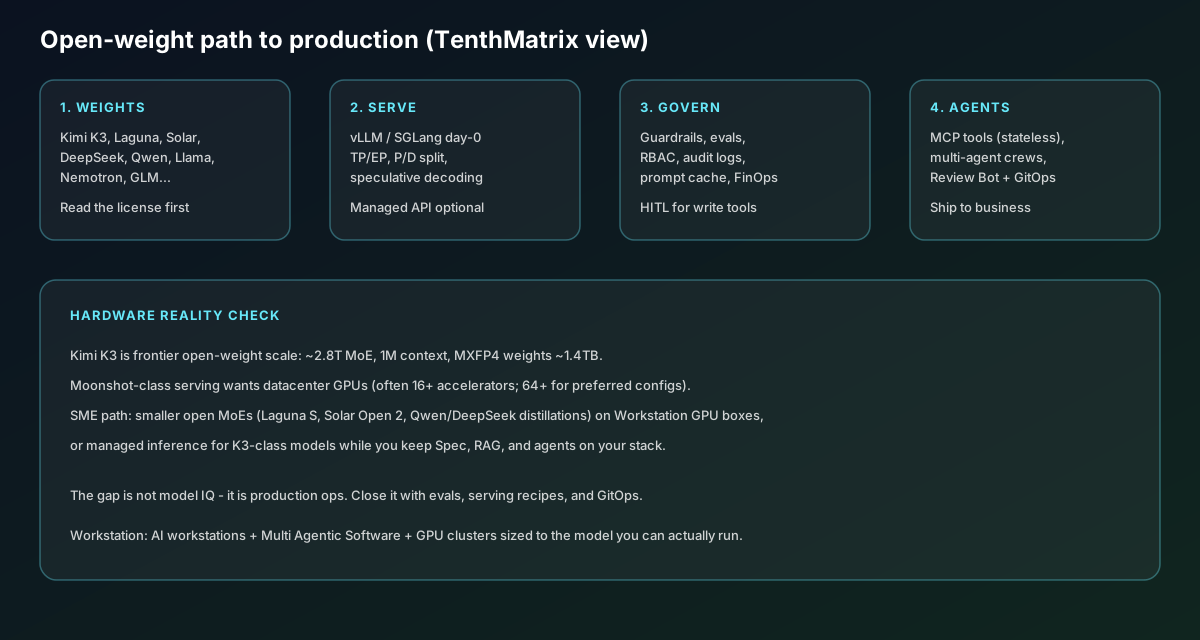
- SMEs: prefer smaller open MoEs (Laguna S 2.1, Solar Open 2, Qwen/DeepSeek-class) on AI workstations / small GPU nodes; use managed K3 APIs if you need that IQ without a rack.
- Enterprises: self-host K3-class only with GPU cluster + MLOps budget; otherwise hybrid — open for private RAG/agents, closed for peak-critical paths.
- Always: eval harness, Review Bot, GitOps, MCP tools with HITL — see our multi-agent workflow.
Full radar (Kimi, Laguna, Solar, DeepSeek, Qwen, Llama, Nemotron, GLM, KAT-Coder, Mage-Flow, Inflect, and more), MCP notes, and a production checklist: long article. Published by TenthMatrix.
More from the blog
Observability Is Not Optional: Make It a Business Standard
Why fragmented monitoring creates blind spots, duplicate spend, and slow incidents — and how to make centralised observability a non-negotiable company standard.
WSL Vault for Compliance: One Tenant Never Opens Another’s Secrets
How WSL Vault keeps app, team, and environment tenants cryptographically isolated — so a stolen root-style token cannot empty the estate — and why dual-tenant control beats secrets sprawl.
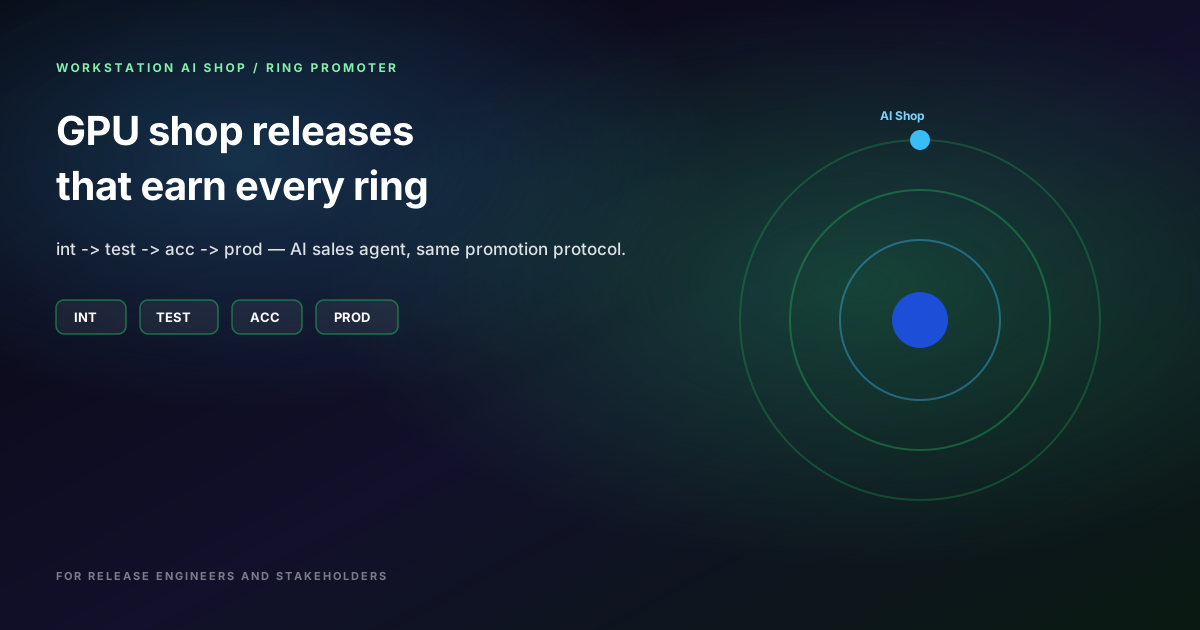
Workstation AI Shop: Promoting the AI Sales Storefront Through int → test → acc → prod
Workstation AI Shop sells GPU machines with a fully autonomous AI Sales Agent that configures the basket. See how Ring Promoter moves each build through int → test → acc → prod — with Orbit screenshots release engineers and stakeholders share.