Article
NebulaCB: Enterprise Couchbase Mission Control That Saves the Day
Open-source upgrades, XDCR validation, Kubernetes operator integration, and local AI with Ollama
On this page
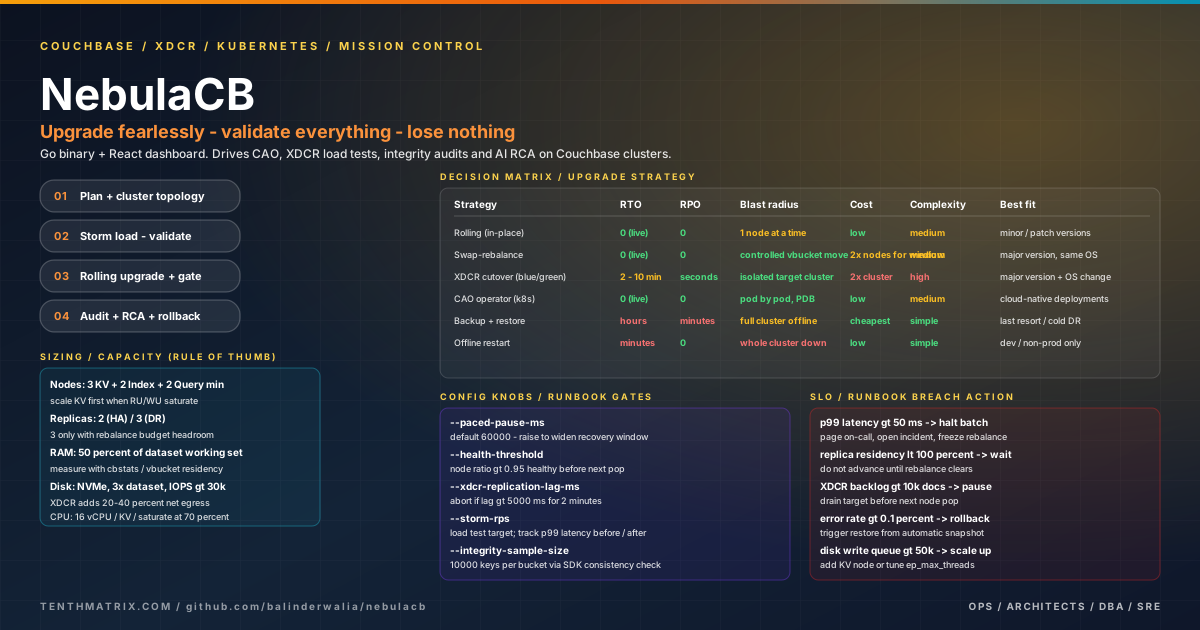
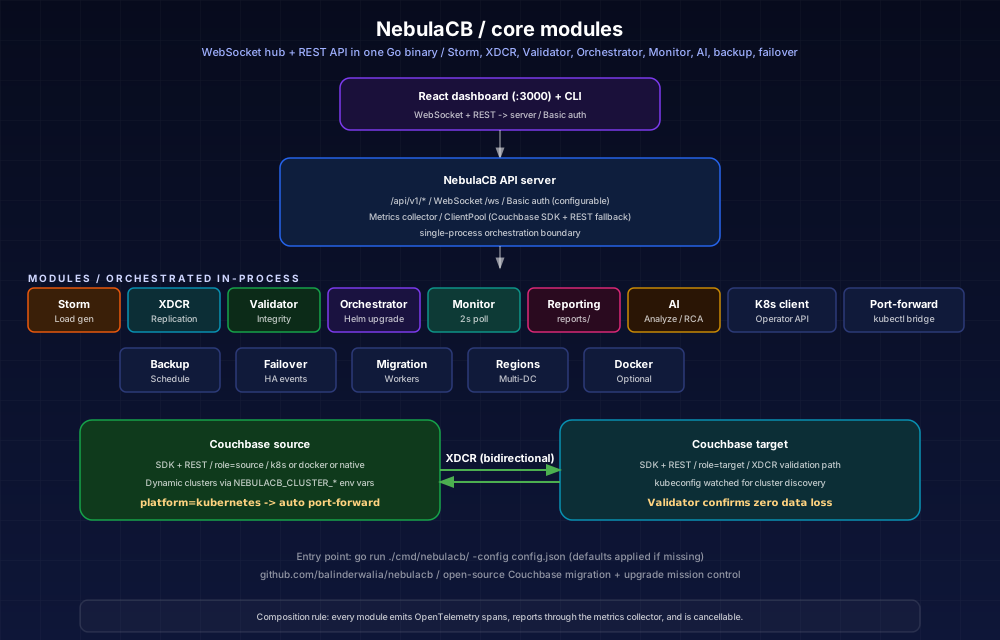
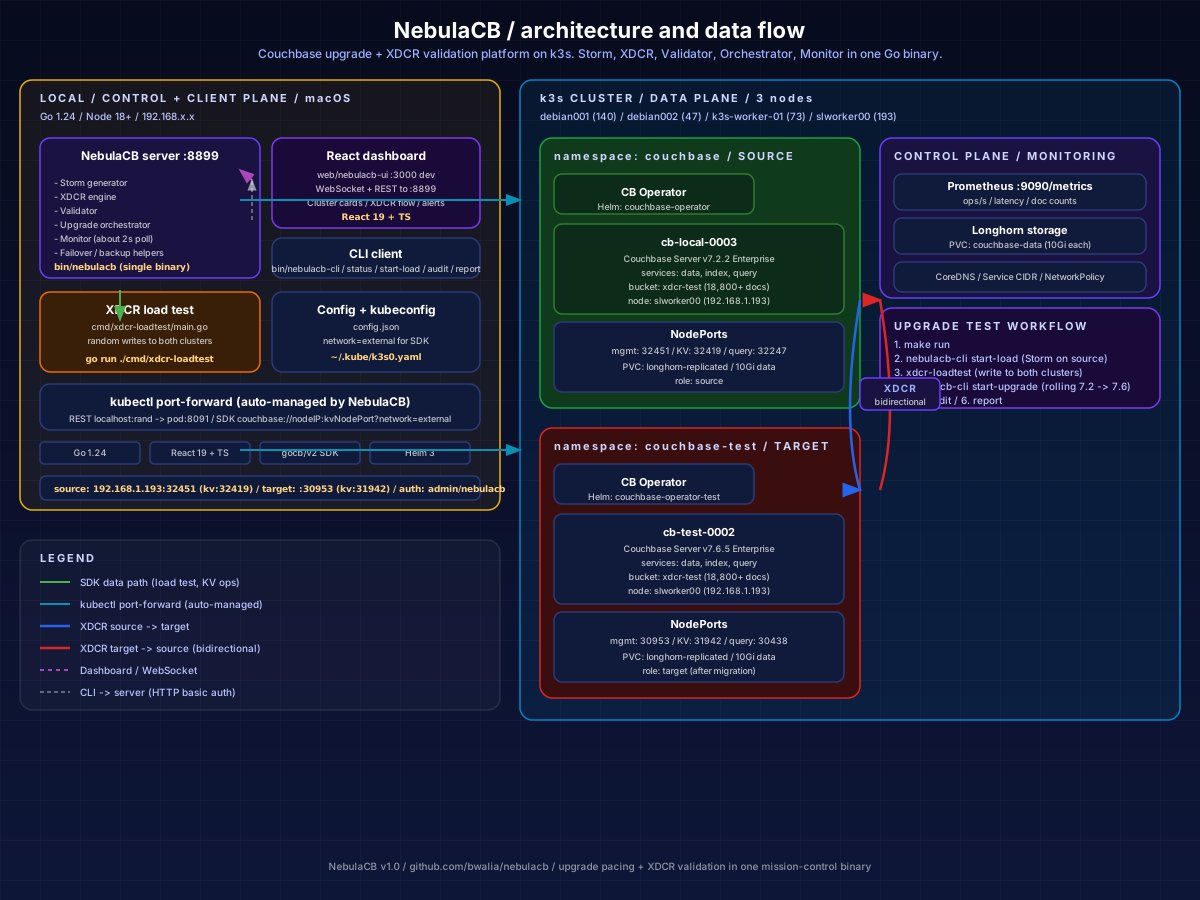
NebulaCB (nebulacb.org) is the open-source Couchbase migration and upgrade mission-control platform from github.com/balinderwalia/nebulacb. The cmd/nebulacb binary loads config.json, can auto-manage kubectl port-forward sessions when a kubeconfig is present, connects clusters through a shared Couchbase client pool, and composes Storm (load), XDCR, validation, Helm-driven upgrades, multi-cluster monitoring (polls about every two seconds), backups, failover, migration, multi-region helpers, optional Docker and AI analyzers, then serves WebSocket + REST from one process.
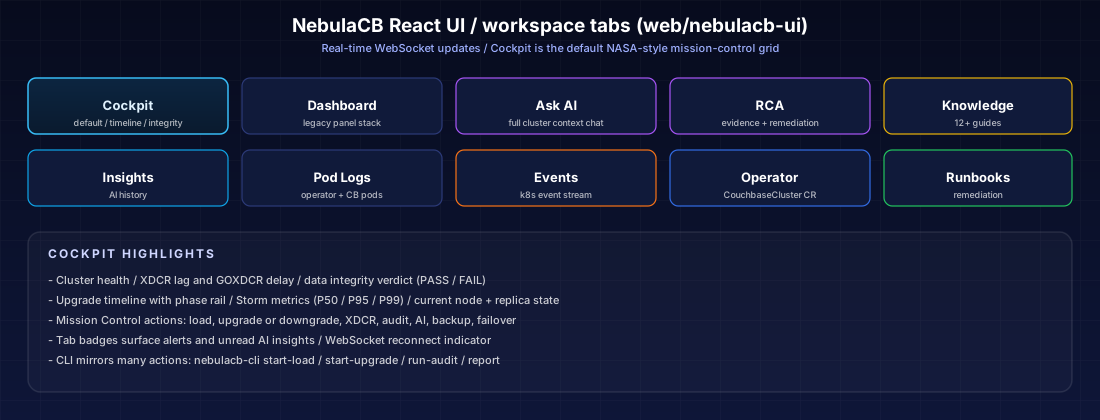
Architecture diagrams (from upstream sources)
Enterprise benefits
- Rolling upgrades with control: Helm-based orchestration with pause, resume, abort, rollback, CouchbaseCluster CR image patching, and node-by-node progress.
- XDCR visibility: Bidirectional replication monitoring, pipeline controls, lag and topology insight, and GOXDCR delay awareness.
- Data integrity proof: Document-count timelines, SHA-256 hash sampling, sequence-gap detection, and full audits on demand.
- Production-like testing: Storm load generator with configurable rates, bursts, and hot keys; latency percentiles for drill confidence.
- Resilience and lifecycle: Auto-failover configuration, backup and restore with retention, and migration with post-run validation.
- AI: Ask AI and structured RCA with Ollama on-premises or other providers via configuration.
Automation surface: bin/nebulacb-cli mirrors the dashboard for load, upgrades, XDCR, audits, chaos drills, and reports over /api/v1. For step-by-step narratives, CLI tables, and API notes, read the TenthMatrix documentation blog: NebulaCB enterprise guide.
More technical articles
Big Prometheus at Scale: Pros, Cons, and a MoSCoW Map of Observability Tools
TenthMatrix rewrite of the Big Prometheus problem space: Thanos, Cortex/Mimir, VictoriaMetrics, M3/Chronosphere — plus MoSCoW across OTEL, Grafana, SaaS APM and more
WSL Vault Technical Deep Dive: Zero-Trust Secrets, Dual Control, MFA & Multi-Region HA
Technical deep dive: envelope hierarchy, dual-control workflows, MFA, leases, active/active multi-region HA, feature tours, and presentation chapters
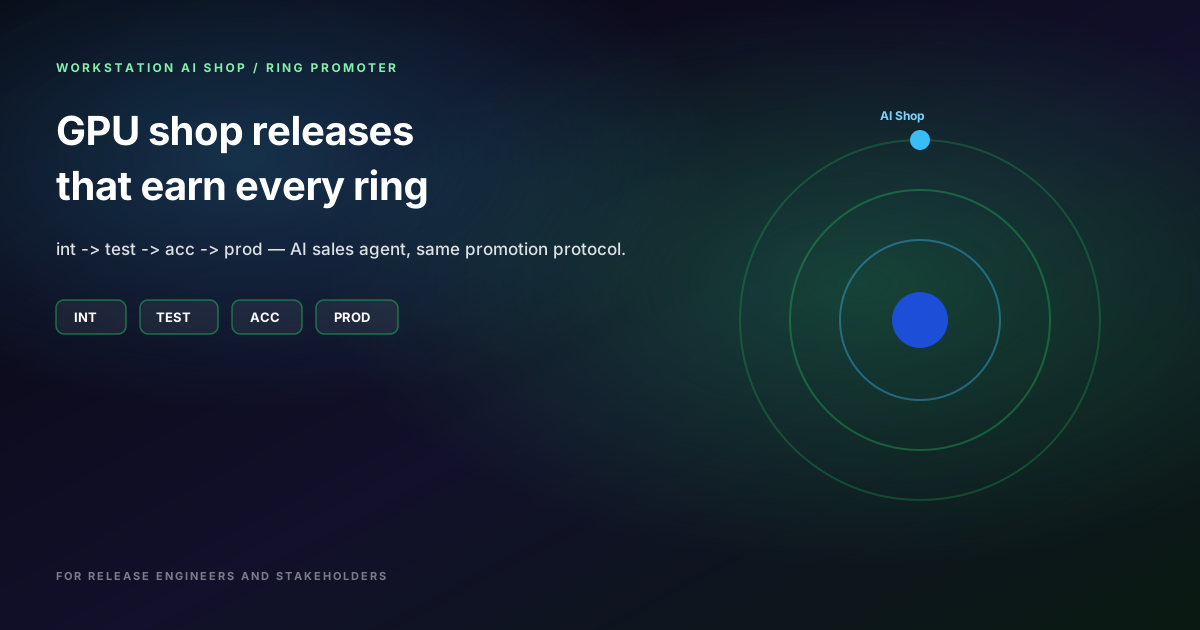
Workstation AI Shop on Ring Promoter: Orbit, Version-Verified Health and the Path from INT to PROD
Technical guide: shop Helm/CI mapping, Orbit semantics, version-verified health for the AI agent, secrets per ring, promote API, and a production checklist