Jev & The Next Generation of AI Automation
The future of AI automation
What happens when decision intelligence gets dramatically cheaper — and which engineering disciplines become mandatory.
Op deze pagina
Belangrijkste punten
- Cheaper decisions increase demand for decisions.
- Governance and evaluation become core product surfaces.
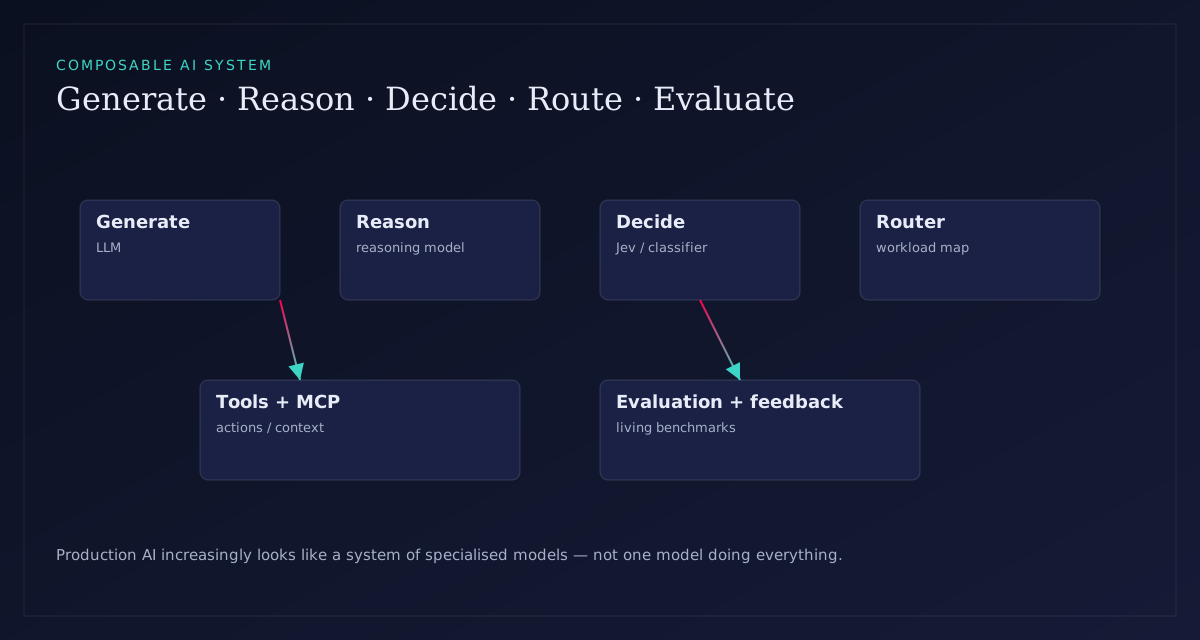
- Composable architectures outlast individual models.
Why this matters
TypeSafe explicitly invokes Jevons’ paradox: cheaper intelligence may increase consumption. If decision calls become nearly free, software will sprout millions of micro-judgements — monitoring, ranking, gating, triage — that were previously uneconomic.
What cheaper intelligence unlocks
- Continuous agent self-checks
- Real-time routing on every event
- Large-scale classification over archives
- Always-on safety scanners
- Fine-grained personalisation policies
What still breaks
- Bad ontologies
- Missing labels
- Unclear ownership
- Security boundaries
- Long-horizon planning
Conclusion
The future of automation belongs to teams who instrument decisions. Models are necessary; measurement is decisive.
Forward-looking scenario planning should include failure modes: provider outages, sudden price changes, regulatory constraints on automated decisions, and user trust collapses after a single high-impact false negative. Build kill switches. Prefer progressive delivery of automation — suggest, then shadow, then enforce. Connect Insights research to Jobs and Teams pages so organisational capability grows with technical capability. The most durable advantage is not access to a single model API; it is a culture that can swap models without rewriting the business.
Forward-looking scenario planning should include failure modes: provider outages, sudden price changes, regulatory constraints on automated decisions, and user trust collapses after a single high-impact false negative. Build kill switches. Prefer progressive delivery of automation — suggest, then shadow, then enforce. Connect Insights research to Jobs and Teams pages so organisational capability grows with technical capability. The most durable advantage is not access to a single model API; it is a culture that can swap models without rewriting the business.
Forward-looking scenario planning should include failure modes: provider outages, sudden price changes, regulatory constraints on automated decisions, and user trust collapses after a single high-impact false negative. Build kill switches. Prefer progressive delivery of automation — suggest, then shadow, then enforce. Connect Insights research to Jobs and Teams pages so organisational capability grows with technical capability. The most durable advantage is not access to a single model API; it is a culture that can swap models without rewriting the business.
Forward-looking scenario planning should include failure modes: provider outages, sudden price changes, regulatory constraints on automated decisions, and user trust collapses after a single high-impact false negative. Build kill switches. Prefer progressive delivery of automation — suggest, then shadow, then enforce. Connect Insights research to Jobs and Teams pages so organisational capability grows with technical capability. The most durable advantage is not access to a single model API; it is a culture that can swap models without rewriting the business.
Forward-looking scenario planning should include failure modes: provider outages, sudden price changes, regulatory constraints on automated decisions, and user trust collapses after a single high-impact false negative. Build kill switches. Prefer progressive delivery of automation — suggest, then shadow, then enforce. Connect Insights research to Jobs and Teams pages so organisational capability grows with technical capability. The most durable advantage is not access to a single model API; it is a culture that can swap models without rewriting the business.
Forward-looking scenario planning should include failure modes: provider outages, sudden price changes, regulatory constraints on automated decisions, and user trust collapses after a single high-impact false negative. Build kill switches. Prefer progressive delivery of automation — suggest, then shadow, then enforce. Connect Insights research to Jobs and Teams pages so organisational capability grows with technical capability. The most durable advantage is not access to a single model API; it is a culture that can swap models without rewriting the business.
Forward-looking scenario planning should include failure modes: provider outages, sudden price changes, regulatory constraints on automated decisions, and user trust collapses after a single high-impact false negative. Build kill switches. Prefer progressive delivery of automation — suggest, then shadow, then enforce. Connect Insights research to Jobs and Teams pages so organisational capability grows with technical capability. The most durable advantage is not access to a single model API; it is a culture that can swap models without rewriting the business.
Forward-looking scenario planning should include failure modes: provider outages, sudden price changes, regulatory constraints on automated decisions, and user trust collapses after a single high-impact false negative. Build kill switches. Prefer progressive delivery of automation — suggest, then shadow, then enforce. Connect Insights research to Jobs and Teams pages so organisational capability grows with technical capability. The most durable advantage is not access to a single model API; it is a culture that can swap models without rewriting the business.
Forward-looking scenario planning should include failure modes: provider outages, sudden price changes, regulatory constraints on automated decisions, and user trust collapses after a single high-impact false negative. Build kill switches. Prefer progressive delivery of automation — suggest, then shadow, then enforce. Connect Insights research to Jobs and Teams pages so organisational capability grows with technical capability. The most durable advantage is not access to a single model API; it is a culture that can swap models without rewriting the business.
Forward-looking scenario planning should include failure modes: provider outages, sudden price changes, regulatory constraints on automated decisions, and user trust collapses after a single high-impact false negative. Build kill switches. Prefer progressive delivery of automation — suggest, then shadow, then enforce. Connect Insights research to Jobs and Teams pages so organisational capability grows with technical capability. The most durable advantage is not access to a single model API; it is a culture that can swap models without rewriting the business.
Forward-looking scenario planning should include failure modes: provider outages, sudden price changes, regulatory constraints on automated decisions, and user trust collapses after a single high-impact false negative. Build kill switches. Prefer progressive delivery of automation — suggest, then shadow, then enforce. Connect Insights research to Jobs and Teams pages so organisational capability grows with technical capability. The most durable advantage is not access to a single model API; it is a culture that can swap models without rewriting the business.
Forward-looking scenario planning should include failure modes: provider outages, sudden price changes, regulatory constraints on automated decisions, and user trust collapses after a single high-impact false negative. Build kill switches. Prefer progressive delivery of automation — suggest, then shadow, then enforce. Connect Insights research to Jobs and Teams pages so organisational capability grows with technical capability. The most durable advantage is not access to a single model API; it is a culture that can swap models without rewriting the business.
Forward-looking scenario planning should include failure modes: provider outages, sudden price changes, regulatory constraints on automated decisions, and user trust collapses after a single high-impact false negative. Build kill switches. Prefer progressive delivery of automation — suggest, then shadow, then enforce. Connect Insights research to Jobs and Teams pages so organisational capability grows with technical capability. The most durable advantage is not access to a single model API; it is a culture that can swap models without rewriting the business.
Forward-looking scenario planning should include failure modes: provider outages, sudden price changes, regulatory constraints on automated decisions, and user trust collapses after a single high-impact false negative. Build kill switches. Prefer progressive delivery of automation — suggest, then shadow, then enforce. Connect Insights research to Jobs and Teams pages so organisational capability grows with technical capability. The most durable advantage is not access to a single model API; it is a culture that can swap models without rewriting the business.
Meer inzichten
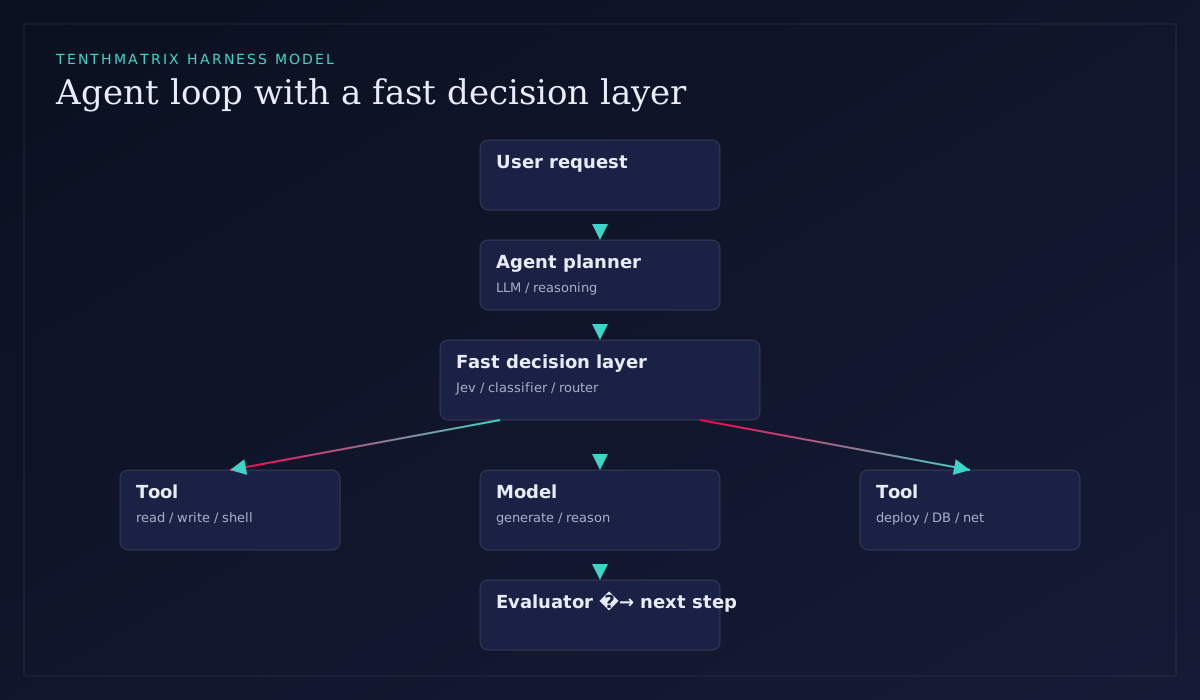
Why agent harnesses need fast decisions
Latency compounds inside agent loops; fast decision layers make routing and gating affordable.
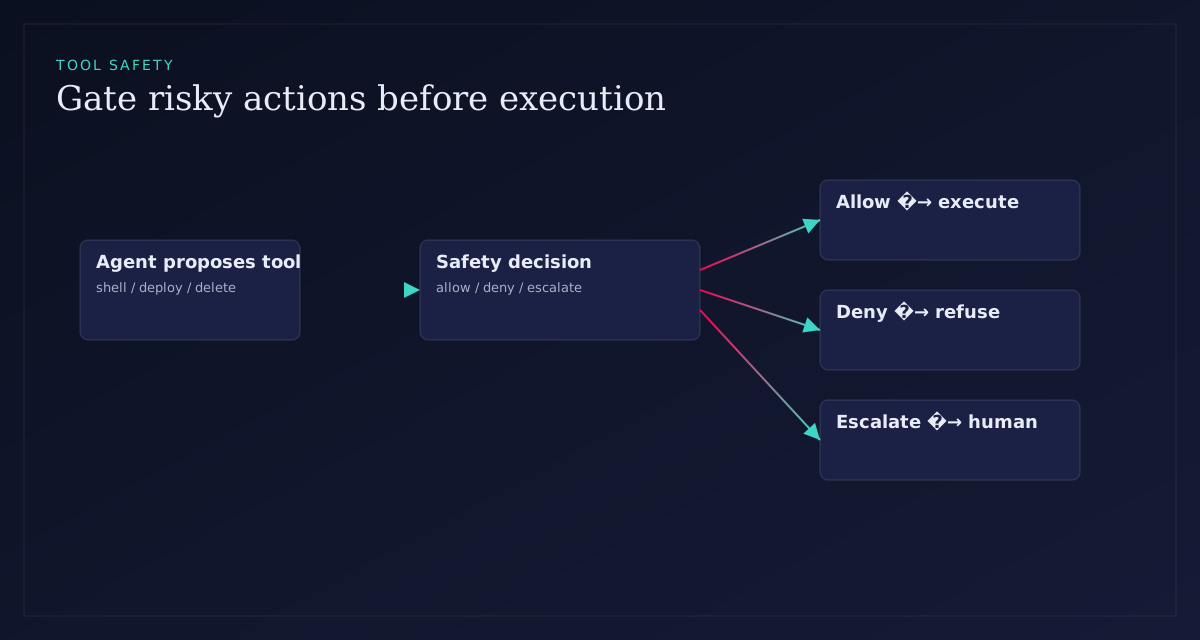
AI guardrails and tool safety
Put allow / deny / escalate in front of shell, deploy, delete and data-mutating tools — and measure false negatives like production incidents.
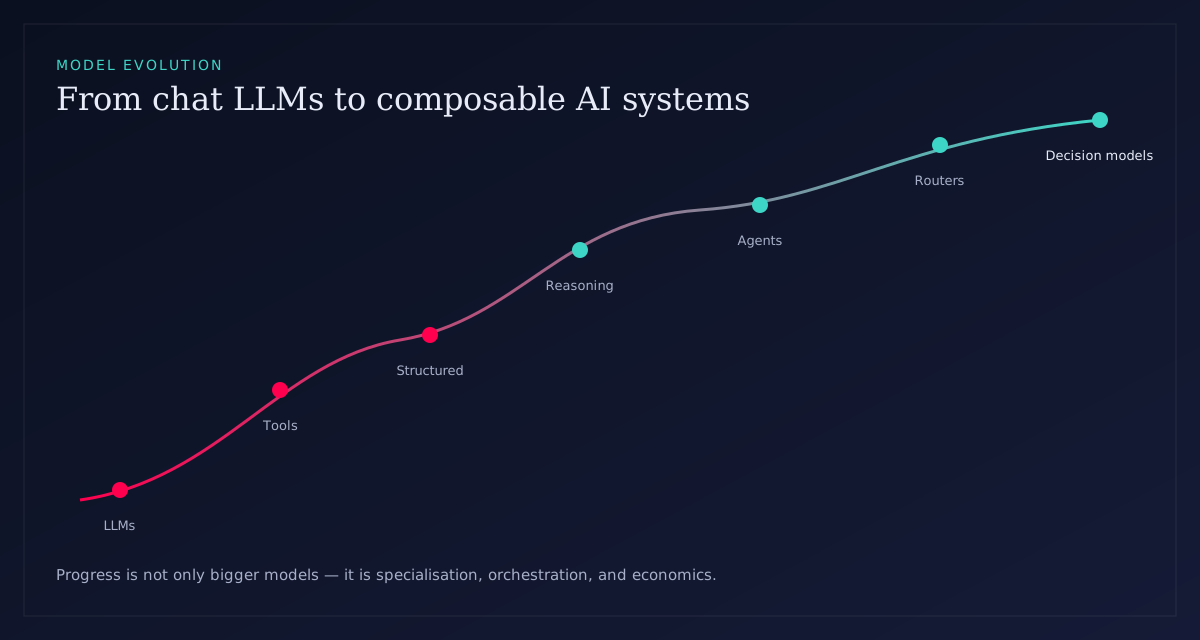
How AI models are evolving
A living TenthMatrix guide to the shift from monolithic LLMs toward tools, reasoning, agents, routers and specialised decision models.